How to Help Your Child Earn More Playing Time in Soccer
Aug 10, 2026
How to Help Your Child Earn More Playing Time in Soccer
Published by DIY Soccer Academy
If you're the parent of a young soccer player, you've probably wondered:
"What can my child do to earn more playing time?"
It's one of the most common questions parents ask, and one of the most important.
Watching your child spend most of the game on the bench can be frustrating.
You want them to have opportunities to learn, contribute, and enjoy the game.
The good news?
Playing time is something most players can influence.
While every coach has different priorities and every team is unique, the players who consistently earn more minutes usually share the same qualities.
Let's take a look at what coaches value most, and how your child can develop those habits.
What Coaches Are Really Looking For
Many parents assume coaches only play the most talented players.
Talent certainly helps.
But coaches often prioritize something even more important:
Players they can trust.
A coach wants to know that when your child steps onto the field, they'll make good decisions, work hard, and help the team.
That trust is earned through consistent preparation, not one great game.
1. Be Coachable
One of the fastest ways to earn more playing time has nothing to do with skill.
It has everything to do with attitude.
Coachable players:
- Listen carefully.
- Apply feedback.
- Stay positive after mistakes.
- Work hard every practice.
- Encourage teammates.
- Show respect to coaches and officials.
Every player makes mistakes.
Coaches notice how players respond to those mistakes just as much as the mistakes themselves.
Players who learn quickly become players coaches rely on.
2. Improve Decision-Making
Soccer is a game of decisions.
Every few seconds, players must decide:
- Should I pass?
- Should I dribble?
- Should I shoot?
- Where should I move?
- How quickly should I react?
The players who consistently make smart decisions help their team play faster and more effectively.
Good decision-making comes from:
- Experience
- Game awareness
- Confidence
- Technical ability
When players trust their skills, they make better choices under pressure.
3. Build Technical Consistency
One spectacular move doesn't earn consistent playing time.
Consistency does.
Coaches value players who can reliably:
- Control the ball
- Complete passes
- Receive under pressure
- Maintain possession
- Dribble with confidence
- Use both feet
Consistency reduces mistakes.
And coaches trust consistent players.
The best way to build consistency is through purposeful repetition outside of team practice.
Every quality touch strengthens technique.
4. Improve Fitness
Even technically gifted players struggle if they tire quickly.
Soccer demands:
- Speed
- Agility
- Endurance
- Recovery
- Explosive movement
Players who maintain their energy throughout games can:
- Press defenders
- Recover defensively
- Support teammates
- Make smarter decisions late in matches
Improving fitness doesn't always require long workouts.
Consistent movement, quality training, and active play all contribute to becoming a more complete athlete.
5. Build Confidence Through Preparation
Confidence is one of the biggest differences between players who hesitate and players who make an impact.
Confident players:
- Call for the ball.
- Stay composed under pressure.
- Try new skills.
- Recover quickly after mistakes.
- Continue competing regardless of the score.
But confidence isn't something players simply decide to have.
Confidence grows from preparation.
Every quality practice session quietly tells a player:
"I'm ready."
That's why preparation matters so much.
What Parents Should Avoid
When children aren't getting the playing time they hope for, it's natural to want answers.
But avoid:
❌ Comparing your child to teammates.
❌ Criticizing coaches immediately after games.
❌ Making playing time the only measure of success.
Instead, focus on growth.
Ask questions like:
"What did you improve today?"
"What did you learn?"
"What can we work on this week?"
Progress creates confidence.
Confidence creates opportunity.
Team Practice Alone Usually Isn't Enough
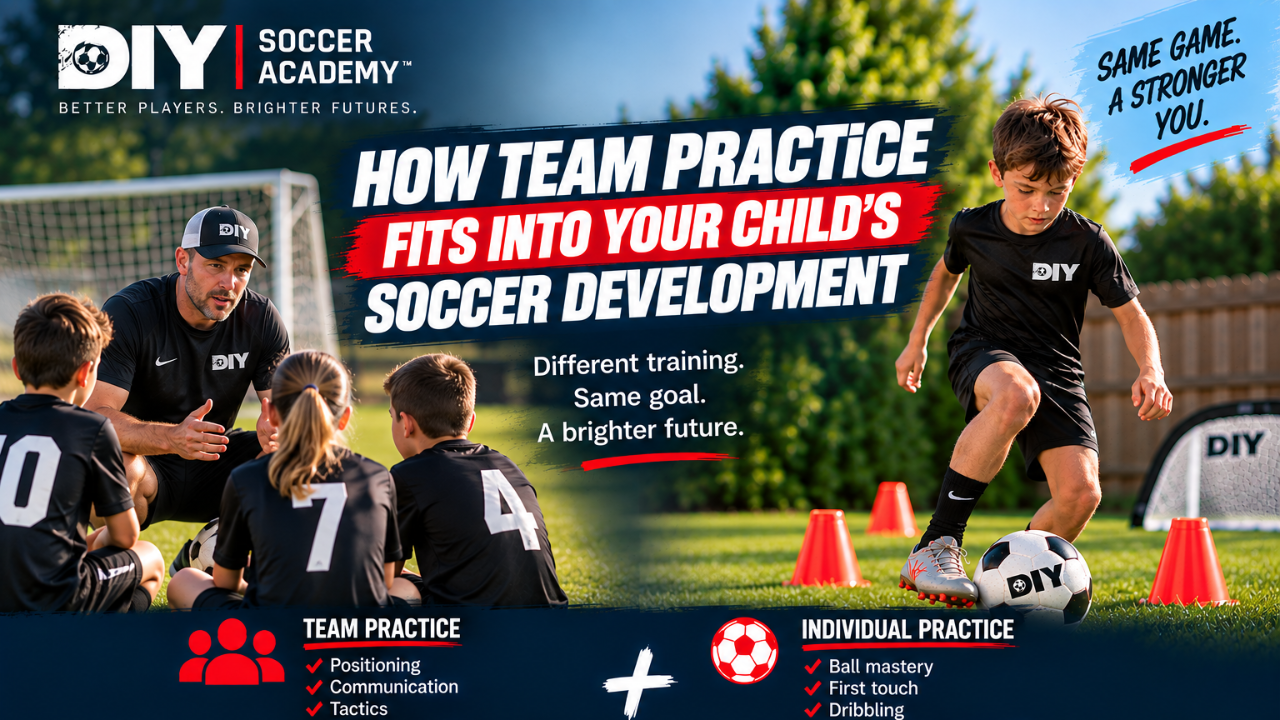
Team practices are incredibly valuable.
Players learn:
- Team tactics
- Positioning
- Communication
- Game strategy
But coaches must divide their attention among an entire roster.
That means limited individual repetitions.
The players who often improve the fastest continue developing between team practices.
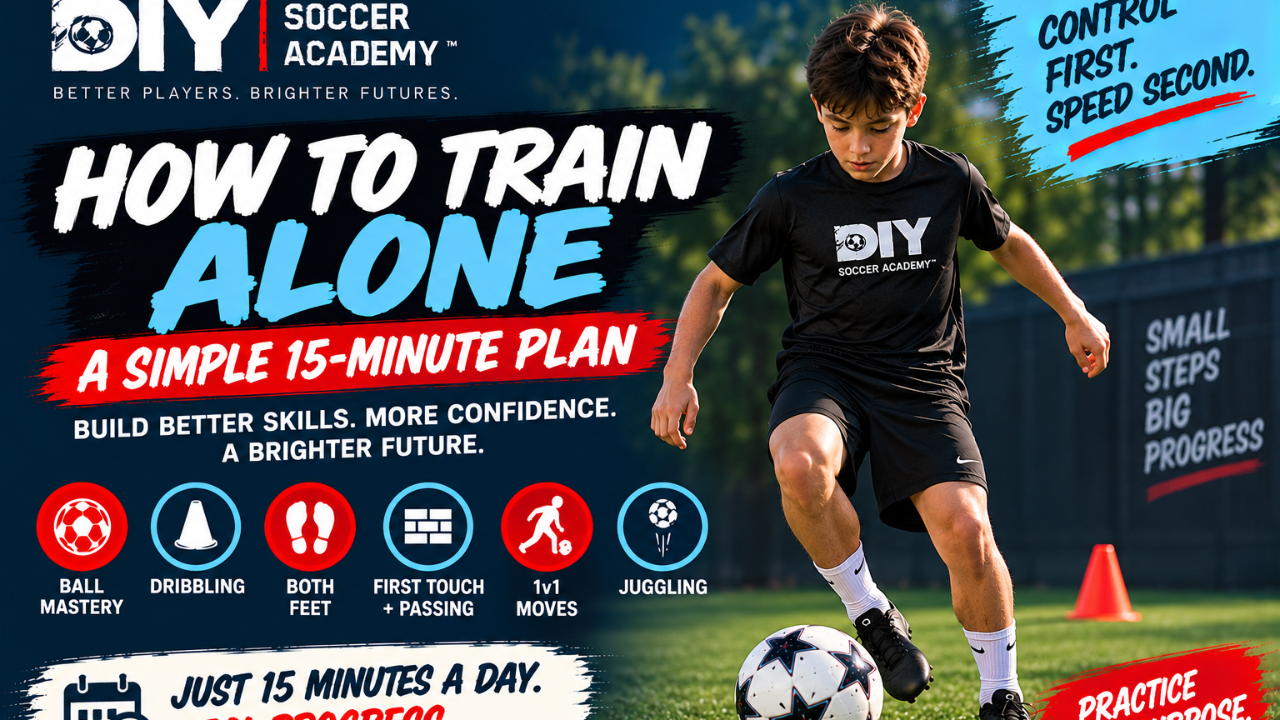
Even just 15 minutes of purposeful practice each day can produce:
- Better ball control
- Sharper first touch
- Stronger passing
- Improved coordination
- Greater confidence
Small improvements accumulate over time.
Focus on What Your Child Can Control
Playing time is never guaranteed.
Every coach makes decisions based on many factors, including the needs of the team.
Rather than worrying about what can't be controlled, encourage your child to focus on what can.
They can control:
✅ Their effort.
✅ Their attitude.
✅ Their preparation.
✅ Their consistency.
✅ Their willingness to learn.
Those habits not only improve soccer, they build character that lasts far beyond the game.
How DIY Soccer Academy Helps Players Earn More Playing Time
At DIY Soccer Academy, we believe confidence begins long before game day.
Our structured player development pathway helps young athletes build the technical skills and consistency that coaches value most.
Through just 15 minutes of purposeful practice each day, players develop:
- Ball mastery
- First touch
- Passing
- Dribbling
- Decision-making habits
- Technical consistency
- Confidence through preparation
When players arrive at practice more prepared, they often perform with greater confidence, and give themselves more opportunities to contribute.
Final Thoughts
Every parent wants to see their child on the field.
The best way to increase that opportunity isn't by hoping for more playing time.
It's by helping your child become the kind of player coaches trust.
Coachable.
Prepared.
Technically consistent.
Confident.
Hardworking.
Those qualities don't develop overnight.
They grow through consistent practice, purposeful repetition, and a willingness to keep improving.
Because earning more playing time isn't just about becoming a better player.
It's about becoming a player who is ready when the opportunity comes.
Ready to Help Your Child Build the Skills Coaches Notice?
DIY Soccer Academy provides a clear player development pathway designed to help young athletes build confidence, improve technical skills, and develop consistent training habits through just 15 minutes of purposeful practice each day.
🌱 Foundation Academy — Build confidence and master the fundamentals.
🎯 Private Coaching Experience — Personalized coaching and expert feedback tailored to your child's unique goals.
Because the players who earn more opportunities are often the ones who prepare for them every day.
FAQ Section
Why isn't my child getting more playing time in soccer?
Playing time depends on many factors, including effort, coachability, technical ability, decision-making, fitness, and the needs of the team. Focusing on steady improvement gives players the best chance to earn more opportunities.
What do soccer coaches look for?
Most coaches value players who consistently work hard, listen to coaching, make good decisions, communicate well, and demonstrate reliable technical skills.
Will extra practice help my child earn more playing time?
Purposeful individual training can improve technical consistency and confidence, helping players perform better during practices and games.
How can I help my child become more confident on the field?
Confidence grows through preparation. Regular practice, celebrating progress, and encouraging effort over perfection help young players become more confident.
Should parents talk to the coach about playing time?
Open communication is important, but conversations should focus on how the player can improve rather than questioning coaching decisions. Asking for specific areas of development can be more productive.
7 Habits Coaches Notice
✅ Shows up ready to train
✅ Gives maximum effort every practice
✅ Listens and applies coaching
✅ Makes smart decisions
✅ Stays positive after mistakes
✅ Communicates with teammates
✅ Continues practicing outside team sessions