How Often Should My Child Practice Soccer? A Parent's Guide by Age
Aug 04, 2026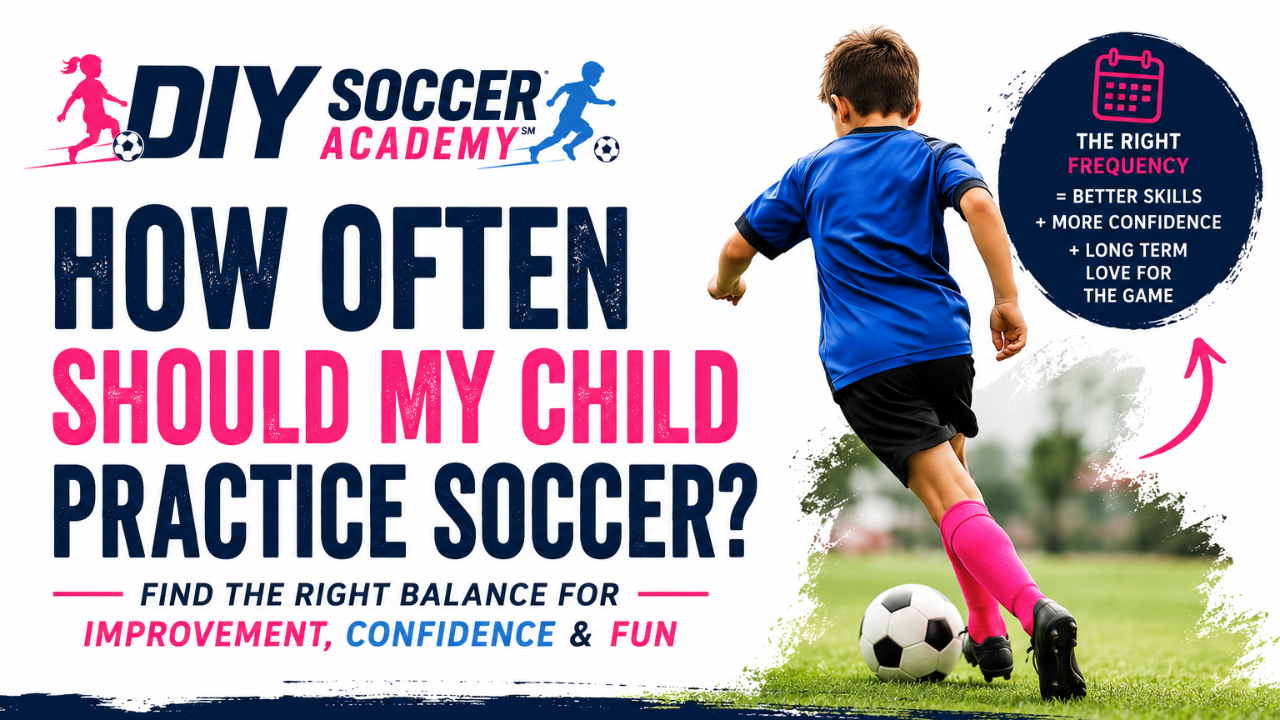
How Often Should My Child Practice Soccer? A Parent's Guide by Age
Published by DIY Soccer Academy
If you're the parent of a young soccer player, you've probably asked yourself:
"How often should my child practice soccer to improve without burning out?"
It's a great question—and one that doesn't have a one-size-fits-all answer.
The truth is, becoming a better soccer player isn't about practicing more. It's about practicing consistently and with purpose.
At DIY Soccer Academy, we've worked with young athletes for years, and we've found that players make the biggest improvements when they follow a structured training plan that matches their age, experience, and goals.
Here's what parents should know.
The Biggest Mistake Parents Make
Many parents assume that simply attending two or three team practices each week is enough for their child to improve.
While team training is important, those sessions are designed to prepare the team for games—not to focus on your child's individual development.
During a typical practice, players share the coach's attention with an entire roster. Individual repetitions are limited, and there isn't always enough time to build technical skills like ball control, passing, first touch, or finishing.
That's why the players who improve the fastest usually spend time practicing on their own in addition to team training.
Recommended Soccer Practice by Age
Ages 5–7: Build Confidence and Have Fun
At this stage, the goal is simple:
Help your child fall in love with the game.
Practice should be enjoyable, active, and centered around developing basic coordination and comfort with the ball.
Recommended schedule:
-
2–3 structured practices per week
-
15–30 minutes per session
-
Lots of touches on the ball
-
Fun games and simple challenges
The objective isn't perfection—it's building confidence.
Ages 8–10: Develop Strong Fundamentals
As children grow, they're ready for more structured training.
This is the ideal age to develop:
-
Ball mastery
-
First touch
-
Passing
-
Dribbling
-
Shooting
-
Coordination
-
Confidence in 1v1 situations
Recommended schedule:
-
3–4 training sessions per week
-
15–30 minutes per session
-
Continue team practices and games
-
Add independent technical training
Consistency matters more than marathon practice sessions.
Ages 11–15: Train with Purpose
Players in this age group often have bigger goals.
They may want to:
-
Make a higher-level club team
-
Earn more playing time
-
Prepare for school or travel soccer
-
Improve technical consistency
Now, training should become more intentional.
Recommended schedule:
-
4–6 quality sessions each week
-
15–30 minutes per session
-
Technical work
-
Tactical understanding
-
Speed and agility
-
Recovery days
The focus shifts from simply playing soccer to developing as a complete athlete.
Quality Always Beats Quantity
Practicing every day doesn't automatically make a better player.
What matters is having a plan.
A focused 15-30-minute session with clear objectives often produces better results than two hours of unstructured play.
Every practice should have a purpose.
For example:
-
Ball mastery
-
Passing accuracy
-
First touch
-
Shooting
-
Decision-making
-
Weak-foot development
Purposeful repetition builds confidence and lasting habits.
Should My Child Practice Every Day?
It depends on their age, experience, and enthusiasm.
For younger players, daily structured training usually isn't necessary.
For older, motivated athletes, short daily technical sessions can be extremely effective—as long as they balance training with rest, school, and other activities.
Remember:
Recovery is part of development.
Well-rested athletes learn better, move better, and stay healthier.
Signs Your Child Needs More Individual Training
If your child is experiencing any of the following, additional training could help:
-
They rarely touch the ball during games.
-
They struggle with confidence.
-
Their first touch lets them down.
-
They want to make a more competitive team.
-
They want more playing time.
-
They love soccer and ask to practice.
These are all signs that structured individual development can make a meaningful difference.
How Parents Can Support Improvement
You don't need to be a soccer expert to help your child grow.
The best support often comes from creating consistent opportunities to practice.
You can help by:
-
Setting aside regular training time.
-
Celebrating effort over results.
-
Encouraging consistency instead of perfection.
-
Focusing on progress rather than comparisons.
-
Making practice enjoyable.
Confidence grows when children see themselves improving one step at a time.
A Structured Path to Improvement
At DIY Soccer Academy, we believe every player deserves a clear development pathway.
That's why we've created coaching programs designed for every stage of the journey.
Foundation Academy helps new players build confidence and master the fundamentals.
Select Academy develops stronger technical skills, consistency, and game intelligence.
Elite Academy prepares ambitious players to perform at their highest level.
For athletes who want individualized guidance, our Private Coaching program provides personalized feedback and development plans tailored to each player's goals.
No matter where your child starts, the key is consistent, purposeful training.
Final Thoughts
So, how often should your child practice soccer?
The answer isn't simply "more."
It's better.
A consistent schedule, age-appropriate training, and expert coaching will do far more for your child's development than endless hours of unstructured practice.
The goal isn't to create perfect players overnight.
It's to build confident athletes who enjoy the game, develop strong habits, and continue improving year after year.
When young players have the right guidance, the right structure, and a love for learning, their potential has room to grow.
Ready to help your child take the next step?
Explore the coaching programs at DIY Soccer Academy and discover the development pathway that's right for your young athlete.
FAQ Section
How often should a 6-year-old practice soccer?
Children ages 5–7 benefit from 2–3 structured practice sessions each week lasting about 15–30 minutes, with an emphasis on fun, confidence, and basic ball skills.
How often should an 8-year-old practice soccer?
Players ages 8–10 typically improve through 3–4 quality training sessions each week, including team practices and independent technical training.
Should kids practice soccer every day?
Not necessarily. Younger players often don't need daily structured training. Older, motivated players can benefit from short daily technical sessions as long as they also have adequate rest and recovery.
Is team practice enough?
Team practice is important, but it focuses on the entire team. Individual training gives young players more touches on the ball and helps build technical skills and confidence between practices.
How long should soccer practice be for kids?
Most young players benefit from focused practice sessions lasting 15–30 minutes. Consistency and quality are generally more effective than long, unstructured sessions.
How often to practice by age.
| Age | Recommended Practice | Session Length | Focus |
|---|---|---|---|
| 5–7 | 2–3 times/week | 15–30 min | Fun, confidence, ball mastery |
| 8–10 | 3–4 times/week | 15–30 min | Technical fundamentals, consistency |
| 11–15 | 4–6 times/week | 15–30 min | Technical, tactical, speed, decision-making |