10 Soccer Skills Every Young Player Should Master First.
Aug 06, 2026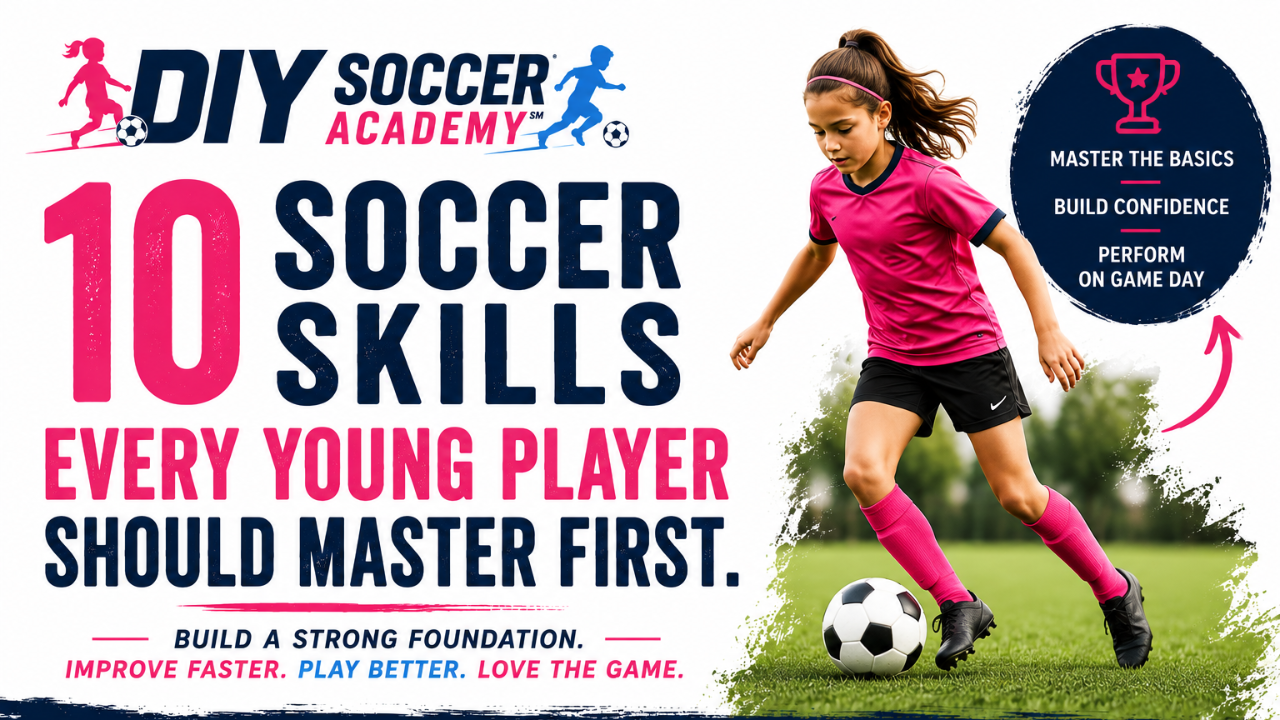
10 Soccer Skills Every Young Player Should Master First.
Published by DIY Soccer Academy
Every parent wants to see their child become a more confident soccer player.
But with so many drills, training videos, and coaching advice online, it's easy to wonder:
"What should my child actually learn first?"
The answer isn't flashy tricks or advanced moves.
The best young players build their game on a strong foundation of fundamental skills.
These core skills make every other part of the game easier to learn, helping children play with more confidence, make better decisions, and enjoy soccer even more.
Here are the 10 soccer fundamentals every young player should master first.
1. Ball Mastery
Every great player starts by becoming comfortable with the ball.
Ball mastery teaches players how to control the ball using different parts of both feet while improving coordination, balance, and confidence.
The more touches a child gets, the more natural the ball begins to feel.
Why it matters:
- Builds confidence
- Improves coordination
- Creates better control under pressure
- Develops quicker feet
At DIY Soccer Academy, ball mastery is the first building block of player development.
2. Dribbling
Dribbling is much more than running with the ball.
Young players should learn how to:
- Keep the ball close
- Change direction
- Accelerate into space
- Use both feet
- Stay under control
Strong dribblers don't panic when defenders approach.
They stay composed because they've practiced controlling the ball hundreds of times.
3. Passing
Soccer is a team game.
Great passing allows players to keep possession and create scoring opportunities.
Young players should focus on:
- Proper passing technique
- Accuracy
- Passing with both feet
- Weight of the pass
- Looking before passing
A simple, accurate pass is far more valuable than a difficult one.
4. First Touch
Ask almost any experienced coach what separates good players from great players, and they'll often mention first touch.
A quality first touch helps players:
- Control the ball
- Create space
- Avoid defenders
- Prepare their next action
The better a player's first touch becomes, the more confident they feel every time they receive the ball.
5. Turning
Soccer rarely happens in straight lines.
Players constantly need to:
- Escape pressure
- Change direction
- Protect the ball
- Attack open space
Learning simple turns early gives young athletes another tool to solve problems during games.
Mastering turns also improves balance and body control.
6. Weak Foot Development
Most young players naturally favor one foot.
That's normal.
But becoming comfortable with both feet creates enormous advantages.
Players who train both feet can:
- Dribble more effectively
- Pass more accurately
- Receive difficult balls
- Become less predictable
Even spending a few minutes each practice using the weaker foot builds long-term confidence.
7. Coordination
Great soccer players are great movers.
Before children become technically advanced, they need to develop athletic movement.
Coordination includes:
- Balance
- Footwork
- Body control
- Rhythm
- Agility
- Reaction
These athletic qualities support every soccer skill they learn.
8. Receiving the Ball
Receiving isn't simply stopping the ball.
It's preparing for what comes next.
Young players should learn to receive:
- Across the body
- Into space
- With different parts of the foot
- Under control
Good receiving creates more time and more options.
9. Decision-Making
Soccer isn't only physical.
It's a thinking game.
Even young players benefit from learning:
- When to dribble
- When to pass
- When to turn
- When to protect the ball
Better decisions often come from greater confidence and stronger technical skills.
When players trust their abilities, they play more freely.
10. Confidence
This might be the most important skill of all.
Confident players:
- Ask for the ball
- Try new skills
- Recover from mistakes
- Stay positive
- Continue learning
Confidence isn't something children are born with.
It's built through preparation.
Every quality repetition makes the next touch feel easier.
Every successful training session makes game day less intimidating.
That's why confidence sits at the heart of everything we teach at DIY Soccer Academy.
Why Fundamentals Matter More Than Fancy Skills
Many young players want to learn advanced tricks before mastering the basics.
While tricks can be fun, they don't replace strong fundamentals.
Players who consistently improve focus first on:
- Controlling the ball
- Passing accurately
- Receiving confidently
- Moving efficiently
- Making smart decisions
Those skills become the foundation for everything that follows.
How to Practice These Skills at Home
The good news is that most soccer fundamentals don't require a full field or expensive equipment.
All your child needs is:
⚽ A soccer ball
🏡 A small training space
⏱️ About 15 minutes
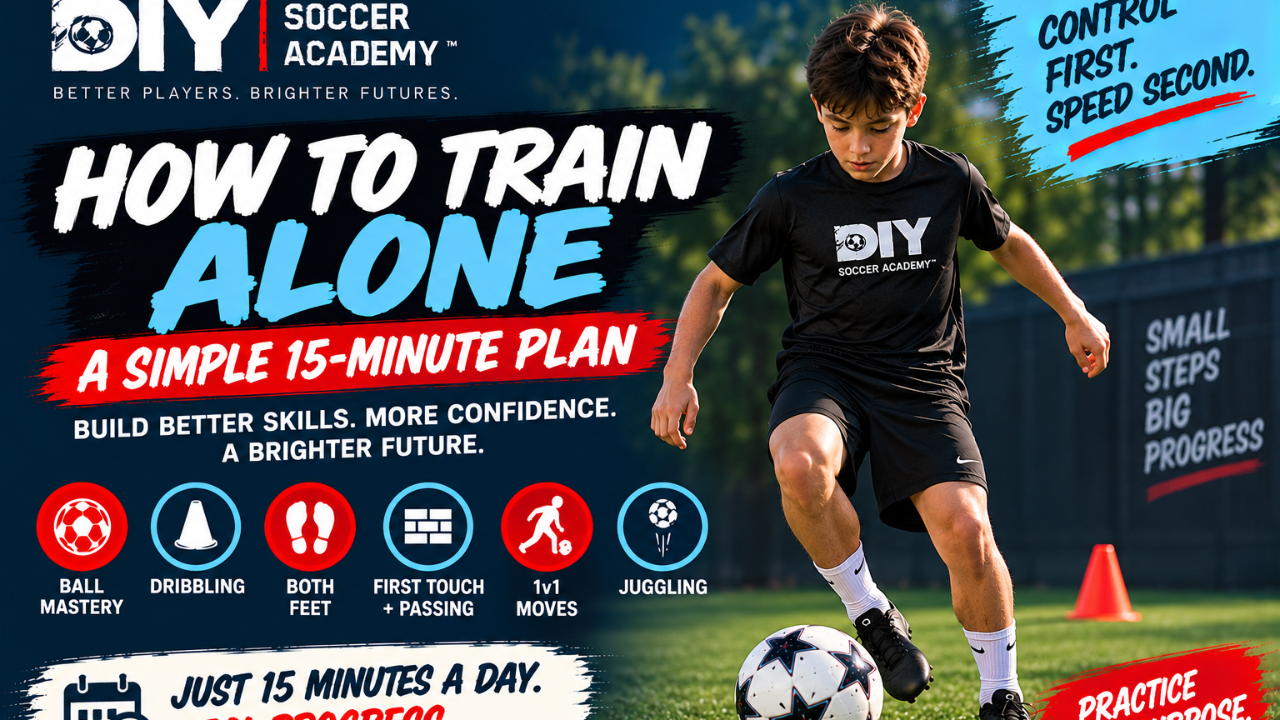
Consistent practice at home between team sessions allows young players to accumulate hundreds of quality repetitions that simply aren't possible during team practice alone.
Over time, those repetitions become confidence.
The DIY Soccer Academy Approach
At DIY Soccer Academy, we believe every great player starts with a strong foundation.
Our structured player development pathway helps young athletes master the fundamentals through:
- Purposeful daily training
- Progressive skill development
- Expert coaching
- Age-appropriate instruction
- Just 15 minutes of focused practice each day
Every lesson is designed to build confidence while helping players improve one skill at a time.
Final Thoughts
Soccer development doesn't happen overnight.
It happens through consistent, purposeful practice.
When young players focus on mastering the fundamentals, they don't just become more skilled.
They become more confident.
And confident players enjoy the game, compete more freely, and continue improving season after season.
Whether your child dreams of making the local club team or competing at the highest levels, every journey begins with the same first step:
Master the fundamentals.
Ready to Help Your Child Build a Strong Foundation?
DIY Soccer Academy provides structured, age-appropriate training that helps young athletes develop confidence, technical skills, and lifelong training habits through just 15 minutes of purposeful practice each day.
Explore the DIY Soccer Academy Player Development Pathway™ and discover the academy that's right for your child's current stage of development.
🌱 Foundation Academy — Build confidence and master the fundamentals.
⚽ Select Academy — Develop greater consistency and stronger technical performance.
🏆 Elite Academy — Train with advanced technical and performance-focused development.
Because every great player starts with a strong foundation.
FAQ Section
What are the most important soccer fundamentals for beginners?
Young players should first focus on ball mastery, dribbling, passing, first touch, turning, coordination, weak foot development, receiving the ball, decision-making, and confidence.
At what age should children start learning soccer fundamentals?
Most children can begin developing soccer fundamentals around age 5 through age-appropriate drills that emphasize fun, coordination, and confidence.
How often should kids practice soccer fundamentals?
Consistent practice is more important than long sessions. Just 15 minutes of focused training several days a week can lead to steady improvement over time.
Can children practice soccer fundamentals at home?
Yes. Most soccer fundamentals can be practiced at home with a soccer ball and a small space such as a backyard, driveway, garage, park, or open indoor area.
Why is ball mastery important?
Ball mastery helps players become more comfortable controlling the ball, improving confidence, coordination, and overall technical ability.