Team Practice Isn't Enough. Here's Why the Best Players Train at Home.
Aug 05, 2026
Team Practice Isn't Enough. Here's Why the Best Players Train at Home.
Published by DIY Soccer Academy
If you've ever watched your child's soccer practice and thought...
"They're only touching the ball a handful of times..."
You're not imagining it.
Team practices are incredibly important, but they were never designed to provide everything an individual player needs to reach their full potential.
That's why the players who consistently improve the fastest aren't necessarily the ones who attend the most team practices.
They're the ones who continue developing between practices.
The good news?
You don't need hours every day.
You simply need a consistent plan.
What Team Coaches Can and Can't Do
Youth soccer coaches have one responsibility above all else:
Develop the team.
That means every practice has to balance:
- Team tactics
- Small-sided games
- Positioning
- Fitness
- Communication
- Team chemistry
- Preparing for upcoming matches
When there are 12–18 players sharing one practice, coaches simply can't provide hundreds of quality repetitions or individualized instruction for every athlete.
That isn't a coaching problem.
It's the reality of coaching a team.
Even excellent coaches have limited time to work with each individual player.
Why Repetition Changes Everything
Every soccer skill improves through repetition.
Passing.
Dribbling.
Ball mastery.
First touch.
Turning.
Receiving under pressure.
The more quality repetitions a player performs, the more natural those movements become.
Confidence doesn't magically appear during games.
Confidence comes from knowing...
"I've done this hundreds of times before."
That's why the best players look so calm with the ball.
They've practiced those movements over and over long before game day.
Individual Development Happens Between Practices
Think about learning any new skill.
Would you expect to become an excellent musician by practicing with a band only twice each week?
Probably not.
The same principle applies to soccer.
Team practice teaches players how to play together.
Individual training teaches players how to become better players.
The two complement one another.
When young athletes spend just a little extra time working on their individual skills, they arrive at team practice more confident, more prepared, and ready to make the most of every session.
How Professional Players Continue Improving
One of the biggest misconceptions in youth soccer is that elite players only train during scheduled team practices.
In reality, professional players spend countless hours refining their individual skills outside of team sessions.
They work on:
- Ball mastery
- First touch
- Passing technique
- Weak foot development
- Finishing
- Movement patterns
- Technical consistency
Not because they're forced to.
Because they understand something important:
Small improvements repeated consistently create extraordinary results over time.
Young players don't need to copy professional training volumes.
But they can adopt the same mindset.
Consistent individual practice matters.
The Good News: You Don't Need Hours Every Day
Many parents assume their child needs another hour of training every evening.
In reality, consistency is far more valuable than marathon training sessions.
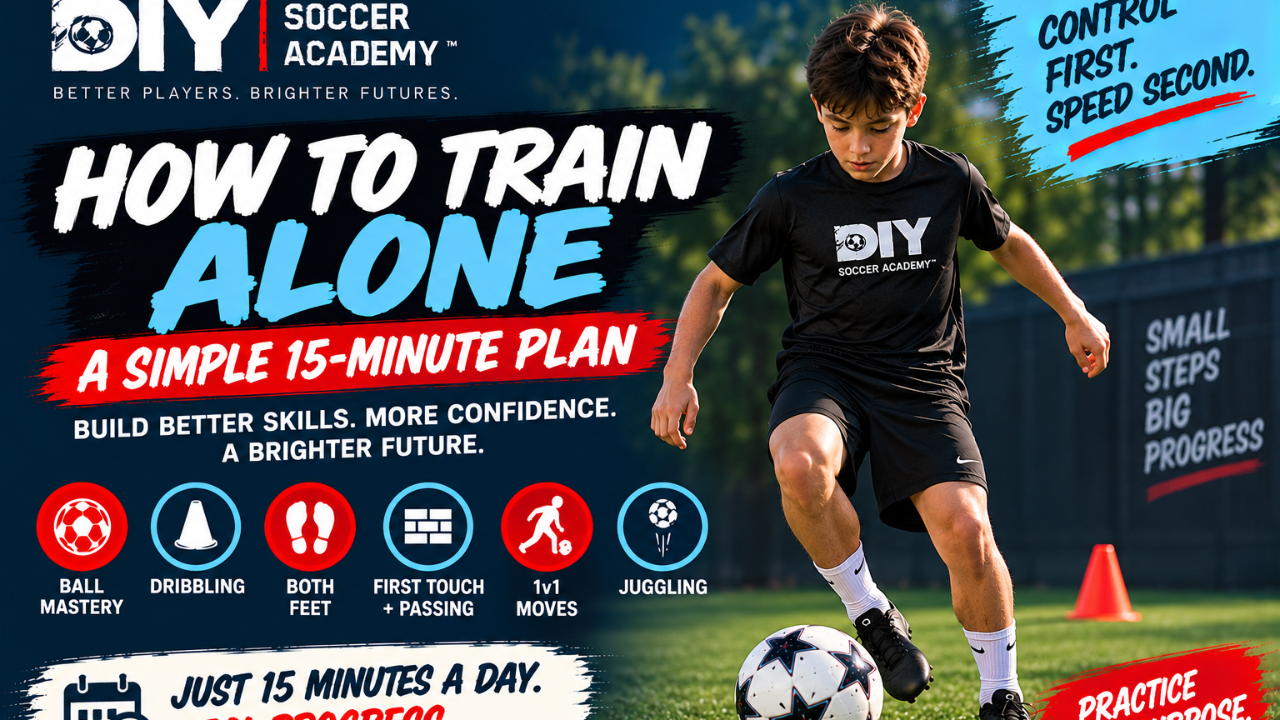
A focused 15-minute session can provide:
- Hundreds of quality touches
- Improved coordination
- Better technical habits
- Increased confidence
- More enjoyment of the game
Those small daily investments compound over weeks and months.
What Soccer Training at Home Looks Like
The best at-home training isn't random.
It follows a progression.
A quality session should include:
✅ Ball mastery
✅ Dribbling
✅ Passing technique
✅ First touch
✅ Coordination
✅ Weak foot development
Most importantly, players should know exactly what to practice.
Removing the guesswork helps families stay consistent and keeps young athletes motivated.
The Complete Development System
Think of your child's development like this:
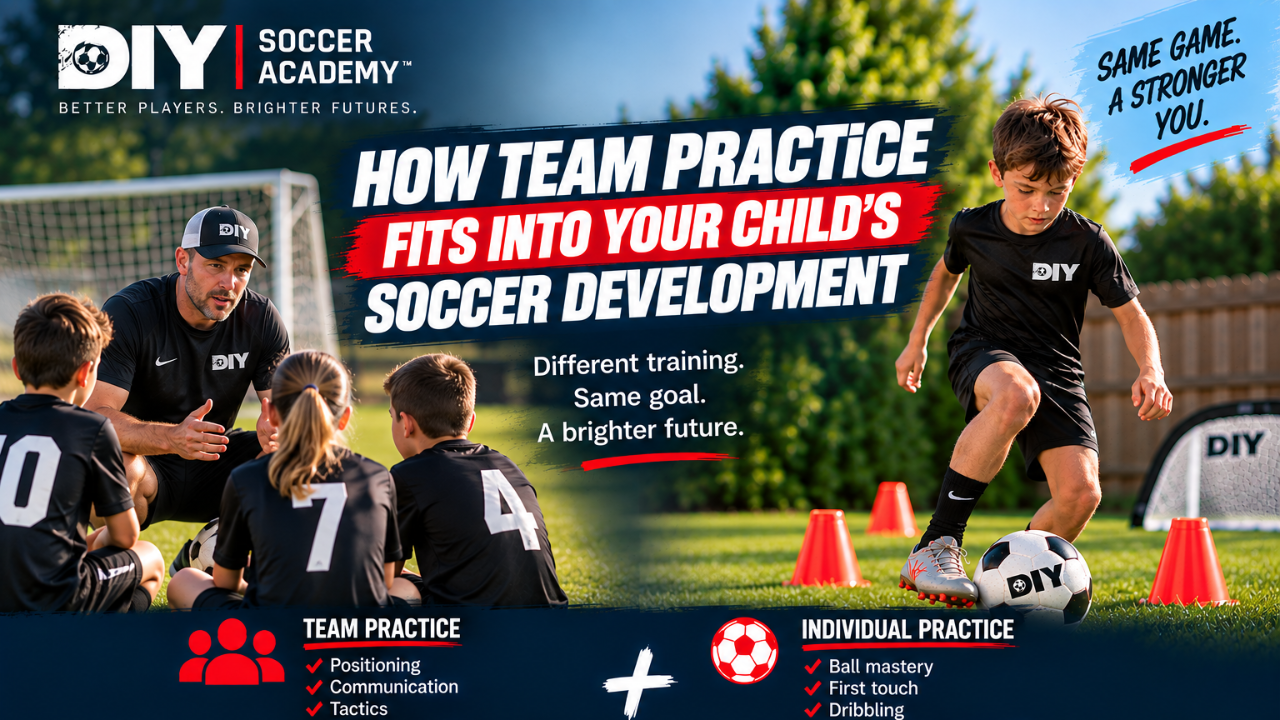
Team Practice Builds the Team.
Players learn tactics, positioning, communication, and teamwork.
Individual Training Builds the Player.
Players improve confidence, technical ability, and consistency through purposeful repetition.
When combined, they create a complete player development system.
Neither replaces the other.
Together, they help young athletes reach their potential.
The DIY Soccer Academy Difference
At DIY Soccer Academy, we believe confidence is built long before game day.
That's why every lesson is designed around one simple idea:
15 minutes of purposeful practice can create a lifetime of confidence.
Our structured player development pathway helps young athletes know exactly what to practice every day, making consistent improvement simple for both players and parents.
Whether your child is just learning the fundamentals or preparing for higher levels of competition, purposeful training between team practices can make all the difference.
Final Thoughts
The best soccer players don't improve by accident.
They improve through consistent, purposeful practice.
Every quality touch.
Every repetition.
Every small improvement.
Builds confidence that carries onto the field.
Team practice will always be important.
But if your child wants to continue growing, the work they do between practices is often where the greatest progress happens.
Continue Your Child's Development
Team practices build teams. Individual training builds players.
If you're ready to give your child a clear, structured plan to build confidence and improve technical skills through just 15 minutes of purposeful practice each day, explore the DIY Soccer Academy Player Development Pathway™.
Whether your child is just getting started or preparing for higher levels of competition, there's an academy designed for their stage of development.
🌱 Foundation Academy — Build confidence and master the fundamentals.
FAQ Section
Is team practice enough for young soccer players?
Team practice is essential for learning teamwork, tactics, and game situations. However, individual training helps players develop technical skills, confidence, and consistency between practices.
Why should kids practice soccer at home?
Training at home gives young players more touches on the ball, helping them improve ball control, passing, first touch, and overall confidence through repetition.
How long should kids practice soccer at home?
Most young players benefit from focused sessions lasting 15–30 minutes. Short, consistent training is often more effective than occasional long sessions.
What should children practice at home?
A quality session should include ball mastery, dribbling, passing, first touch, turning, coordination, and weak-foot development.
Can at-home soccer training improve confidence?
Yes. Purposeful repetition helps players feel more prepared, which leads to greater confidence during practices and games.
Team Practice vs. Individual Training
| Team Practice Provides | Individual Training Provides |
|---|---|
| Team tactics | Technical skill development |
| Team chemistry | Hundreds of quality repetitions |
| Small-sided games | Ball mastery |
| Coach instruction for the team | Individual player improvement |
| Match preparation | Confidence through preparation |
| Position-specific learning | Train anytime, anywhere |